From the crew at DZONE® Skydiving · est. 1967

Feel the
freedom.

There is a version of you that only exists at 14,000 feet — calmer, braver, completely awake. This page is about the feeling that lives up there: what skydiving actually feels like, why people chase it, and how ordinary people walk through extraordinary fear to reach it.

Exit altitude
14,000 ftthe view from the door
Freefall speed
120 mphthe speed of letting go
Freefall time
60 secof pure freefall
Canopy time
5 minof silence under canopy

The feeling

What does skydiving feel like?

Skydiving feels less like falling and more like floating on a wall of wind. Because the plane is already moving fast, there's no stomach-drop — just sixty seconds of loud, weightless presence at 120 mph, then near-total silence when the parachute opens. Ask around: most people call it the most alive they've ever felt.

A first jump isn't one feeling. It's three, in order.

The door

The door slides open and the sky stops being scenery. Wind fills the plane. Your heartbeat moves into your ears. This is the honest part: every jumper on earth knows this exact moment, and nobody is above it. You scoot forward, the horizon tilts — and then you're not in the plane anymore.
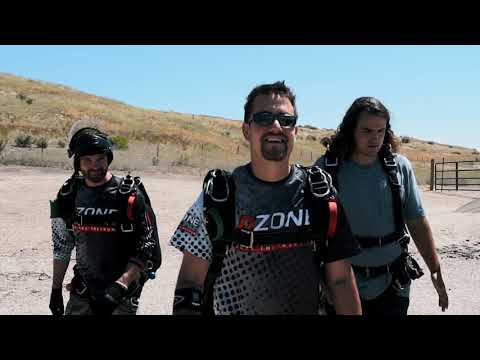
Freefall

Here's the secret nobody believes: it doesn't feel like falling. The wind holds you like a hand pressed flat against the world. You're doing 120 mph and somehow it feels still — no lurch, no drop, just an enormous, roaring now. Sixty seconds that are somehow both the longest and shortest of your life.

The canopy

The parachute opens and the roar switches off like a door closing on a storm. Silence — five whole minutes of it. You can talk. You can steer. You can watch the mountains sort themselves out below you. This is where most people laugh, cry, or both. This is the freedom part.

When once you have tasted flight, you will forever walk the earth with your eyes turned skyward; for there you have been, and there you will always long to return.

Attributed to Leonardo da Vinci

Why we jump

Why do people skydive?

Ask a hundred jumpers why they skydive and you'll hear a hundred versions of the same answer: because everything unnecessary stays on the ground. The noise, the deadlines, the doubt — none of it fits through the door.

Presence

Freefall is the loudest quiet you'll ever know. There's no room up there for your inbox, your rent, or the argument you replayed all week. For one full minute, you are in exactly one place. Most people spend their whole lives looking for that.

Perspective

From 14,000 feet, the big things look small — and they stay that way. Jumpers land with lighter shoulders. The problems don't disappear; they just go back to their actual size.

Proof

Every jump is a receipt: I was terrified, and I did it anyway. That proof doesn't stay at the dropzone. It follows you into interviews, hospitals, hard conversations, new cities.

People

Nobody feels the freedom alone. A dropzone is a campfire with airplanes — strangers in the morning, family by sunset. Ask anyone who's spent a weekend at one.

The fear

How do you overcome the fear of skydiving?

You don't erase the fear — you bring it with you. Being scared to skydive isn't a warning sign; it's the correct human response to an open door at altitude. Here is how first-timers actually get through it.

  1. Expect the fear — and let it be boring

    Everyone is afraid. The instructor with 10,000 jumps was afraid on jump one. Fear just means your brain works. Name it out loud on the drive in; it shrinks when it's spoken.

  2. Replace mystery with facts

    Fear feeds on the unknown, so starve it. On a tandem jump you're harnessed to a professional; the parachute has a backup, and the backup has a small computer — an automatic activation device — watching over you both. Start with the first-jump questions on DZONE® Skydiving's FAQ.

  3. Breathe like it's part of the gear

    In through the nose for four counts, hold for four, out for four. Do it in the car, in the plane, at the door — whenever the wave rises. It isn't a trick; it's a lever wired straight into your nervous system.

  4. Decide once, on the ground

    The door is not where decisions live. Choose at breakfast: today I jump. After that, your only job is to follow your instructor and keep breathing. Courage is a decision you make once — not forty times on the ride to altitude.

  5. Book the morning slot

    Less time for the spiral, calmer winds, and you spend the rest of the day telling the story instead of dreading it.

Fear is the price of admission. Freedom is what it buys.

The film

Nine minutes of freedom

Some things won't fit into words. Feel The Freedom® — The Journey follows what a first jump really looks and feels like, from the nervous laughter on the ride up to the silence under canopy. Filmed with the DZONE® Skydiving family.

Words for the sky

Skydiving quotes worth keeping

For the fridge door, the group chat, or the morning of your first jump.

Life is either a daring adventure, or nothing.

Helen Keller

A ship in harbor is safe — but that is not what ships are built for.

John A. Shedd

Adventure is worthwhile in itself.

Amelia Earhart

Why do we jump? Because the door is open.

Dropzone proverb

Your turn

Read enough? Go feel it.

No article, no video, no quote gets within a mile of the real thing. When you're ready, the DZONE® Skydiving crew — taking people on their first jumps since 1967 — will walk you through everything. Fear included.

Boise, Idaho · Bozeman, Montana · Jumping since 1967

FAQ

First-jump questions, answered straight

Is skydiving safe?

Safer than most people assume. Over the past decade, tandem skydiving in the U.S. has averaged roughly one student fatality per 500,000 jumps, according to United States Parachute Association data. The modern system is built in layers: a main parachute, a reserve parachute packed by a certified rigger, and an automatic activation device that can deploy the reserve on its own.

Risk is never zero — but it's managed by professionals who obsess over it, at dropzones like DZONE® that have been doing this since 1967.

Is skydiving scary?

Yes — for about ninety seconds, and that's the point. The ride to altitude is nervous, the door is loud, and the first three seconds are pure electricity. Then the fear runs out of things to say. What replaces it isn't terror — it's focus, then euphoria. Most first-timers land saying the same two things: “the scariest part was the door” and “when can I go again?”

Does your stomach drop when skydiving?

For most people, no. The rollercoaster feeling comes from sudden acceleration from a standstill. When you leave an aircraft that's already flying fast, you transition into the wind instead of dropping away — it feels more like leaning into a wall of air than falling off a ledge.

Can you breathe while skydiving?

Yes, the whole way down. At 120 mph the air is being pressed toward you, not pulled away. If breathing feels hard in the first seconds, that's excitement, not physics — exhale, or yell (everyone does), and your body takes care of the rest.

How fast do you fall — and how long does it last?

Terminal velocity on a belly-to-earth tandem skydive is about 120 mph. From roughly 14,000 feet you get around 60 seconds of freefall, then four to six quiet minutes under the parachute — enough time to actually look around and take it all in.

Do I need experience for my first jump?

None. On a tandem skydive you're harnessed to a certified instructor who handles the exit, the freefall position, and the parachute. You get a short briefing on the ground, and your only job is to breathe, arch, and take it in. If you can manage a 20-minute briefing, you can skydive.

Looking for prices, age limits, or booking details? Those live on the DZONE® Skydiving FAQ.